

Living Under Political Abuse: A Personal Account from Türkiye
BY: Zeynep bashak
It is one of my hasty mornings: rushing out of the shower, dressing half-wet, and chasing the clock as if punctuality could redeem the day. I didn’t bother to check how much was left on my transport card. Surely enough, I thought, at least three figures. The machine disagrees. The red light blinks its verdict: insufficient. The buzz is annoying, but it’s no longer an embarrassment. I don’t take it personally. A month ago, that same amount of money would have carried me through a few days, but now I can’t make a trip that’s only half an hour long. Around me, others stand stranded, missing the same train, faces turned toward the platform as it departs. The government had raised the fares again. The announcement must have come the night before, cloaked in the usual language of necessity.
I started smoking with a couple of people. The next train won’t arrive for another ten minutes. Since I am writing this for a Western publication, maybe I should state the fact that smoking is pretty regular in Türkiye. It is cheap and gives you a good kick to start your usual twelve-hour shift, and you don’t really worry about those lungs when what you need is to get through the day. Besides, when you work in a crowded and busy coffee shop, smoking is the only way you can justify taking a breather outside for five minutes. It also helps with waiting, and waiting is our national sport. The bus, the paycheck, the documents for your wretched visa, and the next election that won’t matter anymore. Everything comes late, except the fines. I wonder if that’s the trick of power: to make you live always half-expecting and half-ashamed for expecting at all.
The smoke circles upward, dissolving into the sunny morning. In Izmir, days are still bright and warm. This small congregation of people killing time and their lungs together is getting closer. We talk about the price of things: the new fare, the rent, or the cigarettes. Each sentence ends in a sigh. No one complains too loudly; it’s safer to make jokes. Someone says, “They’ll raise the air next.” We all laugh because we know it isn’t really a joke.
In moments like these, despair does not feel dramatic. Despair is banal to us, almost polite. The mind learns to accept smaller and smaller humiliations until the very idea of protest feels like bad manners or, well, futile, a word that has been a condition here… That’s how control works here, through the gradual training of the spirit into exhaustion.
When the next train finally arrives, we file in. The windows reflect the faces, all expressionless, efficient, and hopeless. It is not how it was a few years ago. My country, which has been known for the amiability of its people, is full of faces that are sunken in this early morning. I catch my own reflection and think about how to hope too. Hope is a must-have currency, and how ours has been quietly devalued, in line with our Turkish Lira.
The train moves with that tired rhythm. The air is almost sickening —just too many passengers here because the trains are never frequent enough. The faces opposite me sway in silence, each of us closing our lids now and then. I watch the city through the scratched glass: billboards of smiling ministers, dental ads, the usual illusions of choice, and a lot of veneers. It all blends into a single message: things are fine, keep moving.
I think of how easily people here stopped hoping. It doesn’t happen in one moment, no grand collapse. It’s smaller than that. It’s when you stop refreshing the news because you already know what you’ll see. It’s when you start laughing at the jokes about rent instead of getting angry. It’s when you decline to participate in a protest because you have to fill a shift. Hope dies like that, in installments.
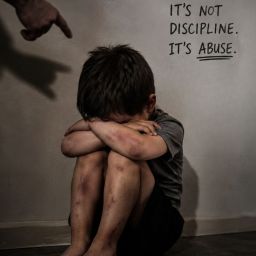
A friend once told me that living under a dictatorship is like living with an abuser. You start to measure safety by silence. You choose your words like someone checking for landmines. After a while, you forget what it was like to speak without calculating the cost. The worst part is you begin to think it’s inescapable, so you bear it. Every day is a new day to go through. You feel naive even for hoping.
The Bureaucracy of Despair
There is no drama to despair anymore. It is bureaucratic, stamped, and approved. You fill in the blanks of your life like government paperwork: neat, official, and hopeless. Make sure the addresses you provide are identical across all documents. Someone will tell you it was worse in the past—thirty years ago, forty years ago, always more years than the years you lived—that prices must rise anyway. They tell you that control keeps us safe, that we are a strong nation, and that all of the powers outside are the reason we have to suffer through things. Other times, they tell you it’s hopeless —the fault lies within the nation. We would’ve ended up here regardless because we’re brainless sheep.
Politics is background noise in Türkiye—the same faces, the same speeches, as well as the same applause recycled across the years. Elections come and go like reruns of a program everyone knows by heart. There are no rivals people fully hope to support anymore. The leader looks down at you from every screen, every poster, every corner of the city. Sometimes, he is adorned with slogans that prompt you to love him. We are meant to watch, to comment, to feel a flicker of outrage, and then go back to work. That’s how the system feeds itself. Truth has become a matter of taste, sincerity, a liability. What authority demands is not loyalty but participation in the performance, and most of us, exhausted, don’t even clap. We just watch in silence.
And so hope becomes a private habit, like smoking. You keep it hidden, you ration it, you tell yourself you can quit anytime. But every morning, you still light one. I believe this is what Political Abuse feels like. I feel ashamed of my hope. The kind of abuse that convinces you you’re lucky things aren’t worse. We’ve been scolded for so long that we’ve learned to thank whoever scolds us. Every price rise, every ban, every speech, they all carry that same tone of correction. They see something you don’t see.
You start to measure freedom by how much you can still joke about it, because at least it is not as bad as that other country, right? The propaganda is no longer on the billboards; it’s in our complaints. Abuse makes you fluent in avoidance.
The Violence of Bureaucracy
Finally, I went to my appointment, which was for a visa so I could resume my travels and pretend to be free. I had been gathering documents for a week: bank statements, proof of accommodation, and letters with signatures that don’t mean much but carry the weight of approval. I used to think bureaucracy was just inefficient. Now I understand it as a kind of violence. It is not loud, not dramatic, but the type that eats your time, your energy, and your self-respect in small, invisible bites.
Political Abuse is not only when people are beaten in the streets or dragged away in the dark, which happens, and we remain silent about it. We forget. No one I know pays attention to the news anymore. It’s also when everything you need to live, transport, rent, permission to move, to study, to dream, is priced just beyond reach. It is Political Abuse that I only have the illusion of freedom when it comes to even leaving. My ten-year Turkish passport is the most expensive in the world. You are free to go if you can afford to pay half of your wage for this tiny booklet. It is Political Abuse when people stop asking why and start asking how much. It’s when you begin to believe that your exhaustion is a personal failure instead of a deliberate design.
I lit another cigarette outside the visa office. Smoking with a bunch of truck drivers who came to renew their visa, so driving for hours could actually pay enough to be worth it. The smoke curls upward, unbothered by borders. It feels like the only thing still free.
If you or someone you know is experiencing Political Abuse or any other form of abuse, there is hope for healing. We support your healing journey towards complete well-being. We bring solutions and real-time education for 28 different abuse types, including Narcissism, Sexual, Physical, Psychological, Financial, Child, Self, Cyberbullying (Including Online Abuse), Bullying, Spousal, Workplace, Elderly, Isolation, Religious, Medical, Food, Authority, Educational, Child Sexual Exploitation, Sex Trafficking, and Political. We’ve added six services and protocols, including Norm Therapy® for PTSD, Educators, Police, Prisons, Suicide, and Military. Support our efforts by visiting AbuseRefuge.org and NormTherapy.com to sign up for Norm Therapy® Training to become one of our dynamic staff members who serve Victims and Survivors of abuse worldwide, schedule Norm Therapy® sessions, become a Live Stream volunteer, join our mailing list to learn how you can make an impact on the Abuse Care Community, and provide life-saving financial assistance with a generous donation.
What are your experiences with Political Abuse? Leave us a comment below about how you’ve navigated hope in difficult political circumstances.