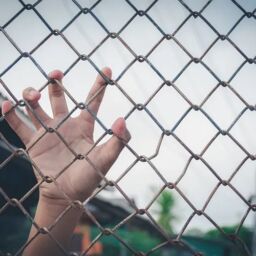


Locked Away: One Child’s Abuse Inside a Special Education Classroom
BY: Dylan Kretchmar
A school should be a safe, nurturing environment where any child can grow and thrive academically, emotionally, and behaviorally. When parents drop their children off, they deserve the peace of mind that the staff will support their child’s needs, rather than become a source of harm. While most schools are staffed by dedicated, well-trained educators, others can fall tragically short.
For Destiny and Ruth Omeri, their son was their pride and joy. They believed his school was adequately supporting his needs as a student with autism, but that trust was shattered in a single evening. The parents had discovered a deep gash on their son’s toe, and their investigation uncovered a horrifying reality: the very people tasked with nurturing their son were the ones inflicting his trauma.
Segregated Classrooms, Limited Oversight, and the Rise in Reported Abuse Cases
Many children profoundly affected by autism will spend much or all of their school day in segregated, self-contained classrooms. While these classrooms can provide students with a beneficial setting that minimizes distractions and provide intensity of instruction they need in order to learn, alongside trained teachers and aids that can support their needs, not all segregated classrooms are like this. In many cases, these environments are often staffed by teachers and aides who may have limited specialized training and receive minimal oversight. Compounding this issue, many of these students are unable to effectively communicate with other adults about their experiences at school (Phillips, 2012).
Since 2000, diagnoses of autism in children have risen dramatically. This increase has especially been felt across school districts nationwide, many of which struggle to fund and provide the services required under the Individuals with Disabilities Education Act (Phillips, 2012).
The result has been a troubling rise in reported incidents of Child Abuse by personnel unequipped to manage challenges related to social skills, self-regulation, and communication (Phillips, 2012).
Additionally, the line between discipline and abuse can become dangerously blurred, especially when students with autism may struggle to connect their actions with consequences. This can create a harmful cycle where initial low-level interventions may work temporarily, then lose effectiveness over the long term. In response, some educators escalate to more aversive or restrictive practices, increasing the risk of harm. Over time, this can foster an atmosphere of fear, heightening anxiety and, in turn, increasing the likelihood of behavioral outbursts (Phillips, 2012).
In 2009, a national review by the Government Accountability Office found that children with disabilities are restrained and secluded in schools and other facilities with alarming frequency. Many of these practices face few restrictions and are sometimes carried out by untrained or undertrained personnel, despite the fact that improper restraint has led to serious injuries and even death. The report also noted that, in many cases, children were subjected to restraint or seclusion without posing a physical threat (Phillips, 2012).
Due to the isolated nature of these classrooms, abuse can go undetected until visible injuries or behavioral changes emerge. To address this, some schools, particularly those with sufficient funding, have installed surveillance cameras in self-contained classrooms, both to protect students and to safeguard staff against false accusations. But not all schools have the funds to do so, especially if it comes between cameras versus hiring quality teachers and aides (Phillips, 2012).
“Daddy…they hurt me. They hurt me real bad.”
Destiny and Ruth Omeri immediately knew something was wrong with their 5-year-old son when they picked him up from school one September evening. Usually he is eager to see them, but today he sat quietly in the back seat, staring blankly ahead.
When the family returned home, Ruth reached down to help her son take off his shoes like she always did. That is when she saw it – dried blood caked on his white sock. Dread building in her stomach, she gently took off the sock to find an inflamed gash in his big toe, the surrounding skin already darkening with a painful looking bruise. Horrified, she showed Destiny, who asked their son what had happened. The 5-year-old, who is autistic, struggled to explain (Talarico, 2023).
“Daddy…they hurt me,” he cried. “They hurt me real bad” (Talarico, 2023).
Furious, Ruth Omeri went straight to the school, demanding to know what had happened and why she hadn’t been informed of his injury. Instead of answers, she received filler answers and conflicting stories. Unsatisfied, she demanded to see surveillance footage of the incident (Talarico, 2023).
The school, citing several procedures, did not release the footage for nearly three months (Talarico, 2023). During that time, the Omeris kept their son home, unwilling to send him back without answers, fearful for his safety.
When they finally received the video, they could barely bring themselves to watch.
The footage begins with their son sitting alone against a classroom wall, barefoot on a rubber play mat. Off-screen, his paraprofessional can be heard scolding him to stop moving and stay where he is (KHOU 11, 2023). However, the young boy cannot sit still for long. He gets up and walks over to a classmate sitting a few feet away, and the two begin to play (KHOU 11, 2023).
What happens next leaves Ruth and Destiny nauseated and furious.
The paraprofessional stalks into the frame and roughly grabs their son by the arm, attempting to drag him toward a small, confined changing room across the space. Crying in fear, the boy resists and manages to shake her free. He immediately crawls back toward the wall where he had been told to sit and hides his head in his arms (KHOU 11, 2023).
That does not satisfy his caretaker.
She walks over to the room, unlocks the door without turning on the lights, then returns to the boy, picks him up, and forces him inside. As he struggles in her arms, his toe catches on the edge of the door, tearing the skin open. The paraprofessional then locks the door behind him (KHOU 11, 2023).
For the next twenty minutes, the Omeris listen to their son crying and pleading to be let out. He repeatedly apologizes.
“Sorry’s not gonna work,” the woman responds, her voice rising as she orders him to sit down and be quiet (KHOU 11, 2023). The boy is too young and in too much pain to comply.
“Foot is hurting. Foot is hurting,” he cries again and again (KHOU 11, 2023). Ruth, watching this all unfold, feels like she is going to vomit.
Some time later, a male paraprofessional enters. He opens the room to retrieve the boy, only to find that the child has removed all of his clothes, a behavior not uncommon for a child with autism. The man can be heard telling him, “Put on your underwear if you want a Band-Aid” (KHOU 11, 2023).
The screen goes dark. Destiny and Ruth fold into each other.
What Happens When Child Abuse is Detected in Schools?
After the footage was released, the school’s principal initiated an investigation that included both a third-party review and a report to Child Protective Services (CPS). However, investigators concluded that the video did not provide sufficient evidence of abuse, neglect, or unlawful discrimination. CPS likewise determined that the situation did not warrant further involvement (Talarico, 2023).
Despite these findings, the Omeris remained determined to share their story so other parents would remain vigilant (Talarico, 2023).
They transferred their son to a new school, where he is now doing well (Talarico, 2023).
At the district level, only limited changes were implemented. The room where the incident occurred is no longer used for calming or sensory purposes until surveillance cameras can be installed. The door to the room has been removed, and students must now enter such spaces voluntarily. Staff are also expected to use positive behavioral strategies during de-escalation (Talarico, 2023).
The paraprofessional involved in the incident has since resigned.
In many cases of Child Abuse in schools, reporting Child Abuse and neglect is guided by federal standards and regulations and mandated by state and local laws. Several key federal laws provide a framework for educators, including the Keeping Children and Families Safe Act of 2003, the Child Abuse Prevention and Treatment Act (CAPTA), and the Family Educational Rights and Privacy Act (FERPA) of 1974 (Crosson-Tower, 2003).
When schools make reports, they typically do so through state or local agencies such as departments of social services, human services, family and children’s services, Child Protective Services (CPS), or departments of children and youth services (Crosson-Tower, 2003).
The Omeri family’s experience highlights the horrifying reality many families with disabled children find themselves in when it comes to their child’s education and wellbeing. While safeguards and regulations are in place, their effectiveness depends on consistent enforcement, proper training, and accountability. For vulnerable students, especially those who struggle to advocate for themselves, ensuring a safe, fostering supportive learning environment is critical.
We support your healing journey towards complete well-being. We bring solutions and real-time education for 28 different abuse types including Narcissism, Sexual, Physical, Psychological, Financial, Child, Self, Cyberbullying (Including Online Abuse), Bullying, Spousal, Workplace, Elderly, Isolation, Religious, Medical, Food, Authority, Educational, Child Sexual Exploitation, Sex Trafficking, Political, Weather and we’ve added six services and protocols including Norm Therapy® for PTSD, Educators, Police, Prisons, Suicide, and Military. Support our efforts by visiting AbuseRefuge.org and NormTherapy.com to sign up for Norm Therapist® Training to become one of our dynamic staff members who serve Victims and Survivors of abuse worldwide, schedule Norm Therapy® sessions, become a Live Stream volunteer, join our mailing list to learn how you can make an impact on the Abuse Care Community, and provide life-saving financial assistance with a generous donation.
References
Talarico, L. (2023, March 20). ‘They hurt me real bad’ | Family claims son with autism mistreated at Lamar CISD elementary school. KHOU 11. https://www.khou.com/article/news/local/child-with-autism-hurt-at-school/285-409f0cdf-cb9a-4d4c-90c3-2a052f7e9a85
Phillips, L. (2012, Janurary 25). Behind Closed Doors: What’s Happening to Students With Autism in America’s Public Schools? National Autism Association. https://nationalautismassociation.org/wp-content/uploads/2013/01/CamerasWhitePaper.pdf
Crosson-Tower, C. (2003). The Role of Educators in Preventing and Responding to Child Abuse and Neglect. International Centre for Missing & Exploited Children. https://www.icmec.org/wp-content/uploads/2015/10/Role-of-Educators-Prevention-Booklet-US.pdfKHOU 11 (2023, March 20). [You Tube Video]. https://www.youtube.com/watch?v=k8WJiwyPgck