

The Unconditional Love of Animals: Teaching Prisoners Compassion and Ending Cycles of Abuse
BY: Sarah Martin
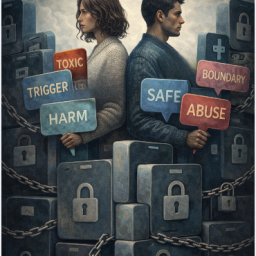
For many people behind bars, the story didn’t begin with a crime; it began with a wound. Cycles of abuse, neglect, and survivalism shape countless lives long before a prison sentence ever does. When children grow up without guidance, without safety, without anyone modeling compassion, it’s not surprising that some eventually stumble into the only patterns they’ve ever known. Yet once they enter the system, they are often treated as if punishment alone can undo a lifetime of harm.
But what if rehabilitation wasn’t just a hopeful ideal? What if there were practical, humane ways to help certain offenders learn responsibility, empathy, and emotional regulation, skills they were never taught in the first place?
Responsibility Brings Healing
Enter the unlikely partnership between incarcerated individuals and rescue dogs. In prisons across the country, programs that pair inmates with abused or abandoned animals are quietly transforming lives on both ends of the leash. As prisoners groom, train, and care for these dogs, something remarkable happens: animals who have learned to fear humans begin to trust again, and people who have spent years hardened by trauma, spinning through the cycles of abuse, begin to soften. They experience responsibility, compassion, and healing, instead of just being another story lost to the cycles of abuse for the rescued animals and the incarcerated who care for them.
It’s a reminder that breaking cycles of abuse doesn’t always start with grand shifts; it can start with a simple act of care, shared between two beings who were never given a fair chance.
Trapped In Patterns
Those incarcerated have frequently spent their lives exposed to various forms of violence and abuse, resulting in post-traumatic stress disorders and a high prevalence of multiple mental and psychiatric disorders, as well as high substance abuse due to those circumstances. Many people who end up incarcerated come from generations of trauma, instability, and cycles of abuse that shaped their earliest understanding of relationships, conflict, and survival. When harm is all someone has ever known, repeating those patterns can feel less like a choice and more like inevitability.
Even after release, the challenges don’t disappear. Without support, many fall back into the same environments and behaviors they grew up in, not because they want to, but because those are the only tools they were ever given. On top of that, a criminal record makes finding stable employment incredibly difficult, leaving people with few pathways toward a different life and increasing the likelihood of returning to the systems they were trying to escape.
Data-Driven Therapy
“Animal Assisted Therapy (AAT) focuses on the multiple benefits of populations with psychiatric issues. Studies have found that AAT sessions resulted in reductions of anxiety, increased social functioning, openness, and a stronger desire for social contact.” (Helms, Amaia, Gibbons, 2025).
Prison Animal Programs (PAPs) are a very special form of AAT conducted in correctional facilities, and studies have found that these programs can have many important effects on inmates, such as increased confidence and the acquisition of usable skills that can help them find employment and stability once they are out. Not only does working with these dogs give inmates an outlet for their emotional trauma, but it also gives them purpose-driven, real-world job skills to ensure they have employable skills when they are released. With a variety of programs popping up across the United States, multiple types are offering different skills with the rescued dogs they work with.
“Dog training programs in correctional facilities (DTPs) allow inmates to take classes and learn to train dogs for service, emotional support, or companionship. Some programs also have a track for grooming classes and work in grooming. Currently, there are 290 DTPs across the US, which differ in program content, capacity, and entry requirements.” (Leslie, 2021). There are other programs for rescuing farm animals, and inmates who complete them become eligible for jobs in grooming or farm work, and even as vet techs once they get out.
Growing Together
The real-life impact of these programs can’t be overstated. Imagine someone who grew up in a home where yelling, violence, and alcohol were the only coping mechanisms they ever saw, where survival meant shutting down emotionally or fighting back. With no guidance, no stability, and no model of compassion, they eventually slipped into life on the streets, pulled into gangs and petty crime to stay alive. Their world became an unbroken chain of abuse: first from their parents, then from the people they relied on to survive. Now picture a tiny puppy, tossed into a dumpster like trash, rescued but terrified of human hands after its own early trauma. In the most unlikely place, a prison, these two wounded beings meet. As the inmate gently grooms and trains the trembling puppy, the dog slowly learns that not all humans will hurt them. And in return, the inmate begins to feel something unfamiliar: trust. Purpose. A reason to get up each day. Watching the puppy grow braver and more confident, the inmate discovers those qualities in themself, too. In this shared journey, both begin to heal. The dog becomes socialized and adoptable, maybe even a future service animal, and the inmate gains skills, confidence, and a glimpse of a life beyond the cycles that once defined them.
Lasting Results
The true measure of these programs is found in two stages of transformation. First, the functional: providing the purpose and professional skills necessary to survive incarceration. Then, the profound: fostering a renewed sense of self-worth through the act of care. For many, this is the first time they have ever experienced a love without conditions, a realization that changes the trajectory of a life long after the gates open.
There are countless examples of inmates being completely changed by these programs; one even got to keep the dog he worked with that changed his life. Former inmate Jason Bertrand participated in the Florida Department of Corrections-approved TAILS (Teaching Animals and Inmates Life Skills) program and became deeply bonded with his assigned dog. This pitbull mix, “Sugar Mama,” had been severely abused herself, and the facility where he was housed arranged things so he could adopt her. Bertrand endured an abusive and tumultuous childhood with a drug addict and abusive father, and he got his first felony at only 16 when he was trying to survive a harsh life on the streets.
“For 15 years, Bertrand lived in ‘a different world’ that doesn’t allow for ‘basic’ human needs such as displaying emotions or giving a hug for fear that it could be misconstrued as weakness. The emergence of Sugar Mama in his life changed that.
“‘I was able to hug her, pet her,’ he said. ‘When I took her on walks, I could talk to her.’ For the first time, he was responsible for another living thing after a lifetime of having the attitude of ‘F— everyone else,’ he said. He didn’t allow himself to think that way for fear of getting kicked out of the program, he said.
“Being concerned for a living thing other than himself surprised Bertrand. ‘Sugar Mama, for me, was my introduction to what it meant to be human,’ he said. The rescue pup also taught him patience and how to communicate effectively.” (Jacobo, 2019). Instead of staying stuck in the only ways he had ever known, this inmate found love, purpose, and a reason to want to get out and stay out of prison. He went on to find a stable career and is happily married with another rescue pup in their family now, too. All because of one animal that showed him there was more.
Hope Beginning To Spread
Across the United States, hundreds of these prison-based animal programs are emerging in more prisons, each quietly rewriting the stories of people and animals who were once discarded or overlooked. Documentaries and firsthand accounts, like Bertrand’s, show just how transformative these programs can be. Inmates who once felt numb, hardened, or hopeless describe discovering purpose, responsibility, and even unconditional love for the first time. They learn to express emotions safely, to care for another living being, and to believe they are capable of change. At the same time, our nation’s animal shelters are overflowing with dogs who have been abused, abandoned, or neglected—innocent victims of human cruelty who desperately need rehabilitation and trust-building to have any chance at adoption.
These programs bring together two beings shaped by trauma and provide each with a path forward. Instead of abused animals being left to languish in shelters or face euthanasia, they are given a second chance through patient, consistent care. And instead of inmates being left to the only cycles they’ve ever known, cycles that feed our overcrowded prisons, they are offered a chance to break free from generational patterns of violence, neglect, and abuse. Working with an animal who has no bias, no judgment, and no preconceived notions allows inmates to reset their understanding of connection. They see their own healing reflected in the dogs they train.
In a world that often focuses on punishment over possibility, these programs remind us that redemption is real. They show that healing can come from the most unexpected partnerships, and that hope grows strongest when shared.
We support your healing journey towards complete well-being. We bring solutions and real-time education for 28 different abuse types including Narcissism, Sexual, Physical, Psychological, Financial, Child, Self, Cyberbullying (Including Online Abuse), Bullying, Spousal, Workplace, Elderly, Isolation, Religious, Medical, Food, Authority, Educational, Child Sexual Exploitation, Sex Trafficking, Political, Weather and we’ve added six services and protocols including Norm Therapy® for PTSD, Educators, Police, Prisons, Suicide, and Military. Support our efforts by visiting AbuseRefuge.org and NormTherapy.com to sign up for Norm Therapist® Training to become one of our dynamic staff members who serve Victims and Survivors of abuse worldwide, schedule Norm Therapy® sessions, become a Live Stream volunteer, join our mailing list to learn how you can make an impact on the Abuse Care Community, and provide life-saving financial assistance with a generous donation.
References
Helms, James “Max”, Iratzoqui, Amaia, Gibbons, Bill. (2025) Animal Focused Prison Program. Public Safety Institute. https://www.memphis.edu/psi/research/pdfs/animal-focused-prison- program.pdf?utm_source=copilot.com
Leslie, S. (2021). A New Lease on Life: Benefits of Dog Training Programs in Prisons. Department of Law, Societies, and Justice Honors Report _sarah_leslie.pdf?utm_source=copilot.com
University of Washington. https://lsj.washington.edu/sites/lsj/files/documents/research/a_new_leash_on_ life-_benefits_of_dog_training_programs_in_prisons_-
Prison Pets: The Heart-Warming Role of Animal Programs Behind Bars. (March 2025). Inmate Aid. https://www.inmateaid.com/information/prison-pets-the- heartwarming-role-of-animal-programs-behind-bars?utm_source=copilot.com
Jacobo, J. (February 2019). A former inmate adopted the dog he had trained in prison, and it changed his life: ‘She taught me patience.’ https://abcnews.com/US/inmate-adopted-dog-trained-prison-changed-life- taught/story?id=60829736&utm_source=copilot.com