
The Hidden Abuse of “Healing Gurus”: How Online Coaches Exploit Vulnerable People
BY: Sarah Martin
A Hidden Abuse, Hiding in Plain Sight
In the sprawling world of online wellness, a new kind of influential voice has emerged—one that promises transformation, healing, emotional rebirth, and more. These promises are sold easily with nothing more than a subscription link and a charismatic smile, often found without trying while scrolling social media. These self‑titled “healing gurus” position themselves as guides for the hurting and the hopeful, offering comfort in a digital landscape where so many scroll endlessly looking for answers and where loneliness, trauma, and uncertainty often collide. Yet beneath the language of empowerment and spiritual awakening lies a more troubling reality: many of these figures are exploiting the very people they claim to help.
The rise of unregulated online coaching has created an easy-to-use space for manipulation. Vulnerable individuals—seeking clarity, connection, or relief—are often met with high‑pressure sales tactics, pseudoscientific claims, and emotionally coercive practices disguised as self‑improvement. What begins as a search for support or scrolling for answers can quickly become a cycle of dependence, financial strain, and psychological harm. There is hidden abuse embedded within the booming “healing” industry, and many ways digital influencers are leveraging trust, trauma, and algorithms to build empires at the expense of those who need genuine care. It’s a conversation long overdue, and one that demands our full attention.
The Rise and Influence of a Dangerous Industry
The rise of online “healing gurus” is inseparable from the massive growth of the global wellness industry—“a sector projected to reach $8.5 trillion by 2027 and continue
expanding rapidly” (Business C Human Rights Resource Centre, 2025). While much of this industry markets itself as many things, such as holistic, empowering, and even spiritual, its lack of regulation has created a stockpile of misinformation, unethical practices, and exploitation of those seeking help. Nowhere is this more visible than in the booming world of online coaching, where anyone can claim to be an “expert” and begin selling guidance to vulnerable audiences.
Research shows that “health and wellness coaches in the United States operate in a completely unregulated environment, with no standardized training, no licensing
requirements, and no governing body to enforce ethical conduct” (Suleta, 2024). This allows self‑proclaimed experts to offer advice on trauma, mental health, and medical issues without the qualifications to do so—sometimes causing direct harm. As Suleta (2024) notes, even “well‑intentioned coaches can inadvertently endanger clients due to inadequate training, while others deliberately exploit ethical gray areas for profit.”
Compounding the problem is the digital world itself. Social media platforms reward emotionally charged content, meaning misleading or harmful wellness advice often outperforms accurate information. A study “analyzing 1,000 TikTok mental‑health videos found that 33% contained misinformation, yet these videos received significantly more engagement than factual ones” (Stea, 2024). This dynamic enables unqualified “healers” to rapidly build influence, followers, and trust—often faster than licensed professionals.
Together, these factors create a perfect storm: a massive, unregulated industry, vulnerable individuals seeking relief, and digital systems that amplify persuasive yet unqualified voices.
The Emotional and Financial Cost
To understand how easily someone can be drawn into the world of unregulated “healing gurus,” imagine the experience of a young adult woman who has spent most of her life
wrestling with anxiety, persistent gut issues, and a growing sense of hopelessness. Over the past year, her symptoms have intensified. She’s exhausted, losing weight, and increasingly depressed. She knows she needs help, but every attempt to get it feels like she is getting nowhere. Her primary care provider is booked out for months, and due to doctor shortages, specialists have even longer waitlists. The few appointments she manages to secure leave her feeling dismissed—told to “reduce stress,” “try probiotics,” or “wait and see.” Nothing is changing, and she can’t keep going on this way. Her symptoms continue to disrupt her entire life, and she feels invisible.
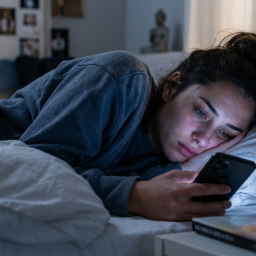
Late one night, desperate for answers, she turns to the internet. She searches for “anxiety and gut issues,” “constant bloating and panic,” “why am I always sick,” and dozens of
variations. So easily, her feed is flooded with videos and posts from wellness influencers and health coaches describing her exact symptoms. They talk about “gut‑brain imbalance,”
“hidden inflammation,” “nervous system dysregulation,” and “root‑cause healing.” The countless videos and posts feel soothing and validating, so she keeps watching and reading. She feels like this is where she will finally find help – they know exactly what she is going through. She finally feels hopeful.
One coach in particular captures her attention: a charismatic figure who calls herself a “holistic gut‑mind expert.” She posts daily videos about anxiety, trauma, and digestive issues, each framed as a personal revelation. She claims she once suffered exactly the same way—until she discovered the “real cause” of her symptoms and healed herself completely. Her comment sections overflow with praise from followers who say she “changed their lives.” The young woman books a consultation, convinced she has finally found the help she needs.
The coach charges hundreds of dollars for a “personalized healing protocol,” which turns out to be a generic PDF filled with restrictive diets, unproven detox routines, and vague emotional advice. When her symptoms don’t improve, the coach suggests she needs “deeper work” and encourages her to purchase additional sessions, specialized supplement bundles, and access to an exclusive online community. Each step costs more. Each step promises healing and finally getting to the “cause” of issues and symptoms. Each step leaves her feeling more confused, ashamed, and financially strained.
By the time she starts to realize the advice is unsound—and in some cases potentially unsafe, she has spent well over a thousand dollars. Worse, she feels like she has failed the program rather than recognizing that the program failed her. The coach’s messaging reinforces this: “Healing takes commitment.” “Your mindset is blocking your progress. You have to invest in yourself.” This scenario is hypothetical, but the pattern is real. It reflects a growing reality in which vulnerable people—isolated, overwhelmed, and searching for relief—are drawn into systems that mimic care but lack the training, ethics, and accountability required to provide it. These stories matter because they reveal the human cost behind the wellness industry’s shiny, appealing surface: people seeking help and instead finding exploitation disguised as healing.
The Consequences of False Promises
The consequences of falling into the world of unregulated “healing gurus” extend far
beyond wasted money. In the short term, individuals often experience a deepening of the very symptoms they sought help for. Restrictive diets, detox regimens, and supplement overload can worsen gut issues, disrupt sleep, and heighten mental illnesses. When these “interventions” fail to deliver the promised transformation or healing, many people internalize the blame. They are told that their lack of progress reflects a lack of discipline and commitment. This emotional burden compounds existing issues and illness, leaving individuals feeling ashamed, defective, or responsible for their own suffering.
Financial strain is another immediate consequence. Many coaching programs operate on a tiered upsell model, where initial fees lead to additional costs for “advanced” sessions, supplements, or “exclusive” communities where you finally learn more, or the main secret to success and healing you supposedly can only find there. For someone already struggling with health issues, these expenses can quickly become overwhelming, creating guilt and stress that further keep individuals from real healing and well‑being.
The long‑term effects can be even more damaging. Prolonged reliance on unqualified coaches may delay or prevent individuals from seeking legitimate medical or mental‑health care. Conditions that could have been treated early may worsen, becoming more complex or chronic. Some people develop disordered eating patterns after following restrictive protocols. Others experience a profound breakdown of trust—both in themselves and in the healthcare system. After being misled or harmed, they may become skeptical of all professional guidance, making future help‑seeking even more difficult. This can be especially dangerous for those suffering from mental illness with suicidal thoughts who desperately need professional help. Psychologically, the aftermath often includes a sense of betrayal. Many individuals entered these programs with hope, vulnerability, and a genuine desire to heal. Realizing they were exploited can trigger grief, anger, or a renewed sense of isolation. For some, the experience mirrors the dynamics of Emotional Abuse: dependency, manipulation, and the gradual erosion of self‑confidence.
Socially, the impact can ripple through one’s entire social circle. Friends and family may struggle to understand why someone invested so heavily in a coach or program that seems obviously flawed from the outside. This disconnect can strain relationships and deepen the
individual’s sense of alienation. These consequences reveal a painful truth: when
unqualified “healers” step into roles meant for trained professionals, the cost hits those who can least afford it and are desperately looking for help and healing the most.
A Call to Action
The rise of unregulated online “healing gurus” reveals a complicated truth about the modern search for wellness. People are not turning to these figures because they are careless or uninformed—they are turning to them because they are hurting, overwhelmed, and often unable to access the care they need. In that gap, charismatic voices offering certainty and comfort can feel like lifelines.
Yet as the stories and patterns show, those lifelines can quietly become traps, leaving individuals more distressed, more confused, and more isolated than before.
Understanding this large and problematic industry requires more than pointing to
individuals. It requires acknowledging the broader conditions that make these dynamics possible: long wait times, inaccessible healthcare, and the rapid spread of digital misinformation. These systemic challenges shape both where people turn for help and the risks they encounter along the way.
As readers, observers, and participants in digital spaces, we each play a role in how these narratives unfold. Taking time to reflect on the content we consume, the claims we encounter, and the voices we elevate can help create a more informed and discerning environment. Awareness is not a solution on its own, but it is a meaningful first step—one that invites us to look more closely, question more thoughtfully, and engage while paying far more attention in a world where the line between help and harm is not always easy to see.
We support your healing journey towards complete well-being. We bring solutions and real-time education for 28 different abuse types including Narcissism, Sexual, Physical, Psychological, Financial, Child, Self, Cyberbullying (Including Online Abuse), Bullying, Spousal, Workplace, Elderly, Isolation, Religious, Medical, Food, Authority, Educational, Child Sexual Exploitation, Sex Trafficking, Political, Weather and we’ve added six services and protocols including Norm Therapy® for PTSD, Educators, Police, Prisons, Suicide, and Military. Support our efforts by visiting AbuseRefuge.org and NormTherapy.com to sign up for Norm Therapist® Training to become one of our dynamic staff members who serve Victims and Survivors of abuse worldwide, schedule Norm Therapy® sessions, become a Live
Stream volunteer, join our mailing list to learn how you can make an impact on the Abuse Care Community, and provide life-saving financial assistance with a generous donation.
Sources
Business C Human Rights Resource Centre. (2025). New report outlines reality of worker exploitation in wellness industry. Business C Human Rights Centre. https://www.business- humanrights.org/en/latest-news/new-report-outlines-reality-of-worker-exploitation-in-the- wellness-industry/?utm_source=copilot.com
Suleta, K. (2023). Health care coaches are the next big thing. They’re also completely unregulated. https://www.statnews.com/2023/05/09/health-care-coaches- regulation/?utm_source=copilot.com
Stea, J. N. (2024). The multi-trillion-dollar wellness industry is making us sick. The Walrus. https://thewalrus.ca/wellness-industry-is-making-us-sick/?utm_source=copilot.com